Get to know the experts and visionaries taking the stage. Discover their backgrounds, areas of expertise, and the unique perspectives they will bring.
Session 1: Welcome to the Convocation – Igniting Innovation from Above and Beyond
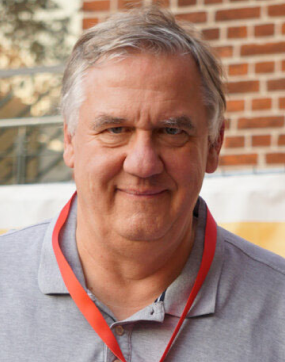
Frank Behrendt
CAETS President / acatech Fellow
Professor Dr. Frank Behrendt, born in 1959, studied chemistry at RWTH Aachen University and Ruprecht-Karls University Heidelberg, where he worked on the simulation of laminar diffusion flames and earned his doctorate in 1989. After conducting research in Sweden and the United States, he completed his habilitation in 'Technical Combustion' at the University of Stuttgart in 1999. In 2001, he took up the position of Professor of Energy Process Engineering and Conversion Techniques of Renewable Energies at TU Berlin. His scientific work focused on investigating reactive two-phase flows, particularly the thermochemical conversion of biomass. This involved comprehensive experiments complemented by extensive modelling, numerical simulations and economic and ecological assessments. His research portfolio also included modelling energy systems, with a focus on integrating renewable energies into electrical and thermal networks. He retired from this position in March 2025. Since April 2022, he has served as TU Berlin’s President's Representative for International Affairs, Fundraising, and Alumni. Prof. Behrendt was elected a Fellow of the German Academy of Technical Sciences (acatech) in 2007 and of the Swiss Academy of Engineering Sciences (SATW) in 2016. In 2019, he was appointed Consulting Professor at the School of Management and Economics of the Beijing Institute of Technology. In 2024, he was honoured with the Chinese Government Friendship Award.
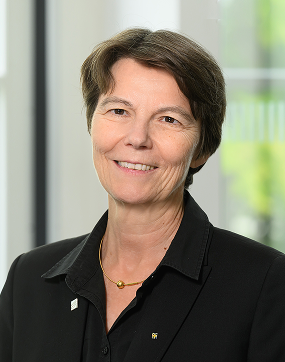
Claudia Eckert
acatech President
Prof. Dr. Claudia Eckert is President of acatech – National Academy of Science and Engineering and executive director of the Fraunhofer Institute for Applied and Integrated Security AISEC in Garching and professor at the Technical University of Munich, where she holds the Chair for IT Security at the Department of Computer Engineering (CE) of the School of Computation, Information and Technology (CIT). Her research interests include the development of technologies to enhance the system and application security, the security of embedded systems, and the investigation of new techniques to increase the resilience and robustness of systems against attacks. Since July 1st, 2025, Claudia Eckert has been appointed as Scientific President of acatech. In this role, together with Co-President Thomas Weber, she heads the academy, which advises policymakers and society on issues relating to technology-driven innovation. She has been a member of acatech since 2010 and a member of the Executive Board since 2014. She is also a member of the Bavarian Academy of Sciences and Humanities (BAdW). She plays an active role on numerous scientific boards of trustees and advisory boards, including the Volkswagen Foundation's Board of Trustees, the Bavarian AI Council, and the National Cybersecurity Council's scientific working group. In 2021, Claudia Eckert was honoured with the Bavarian Order of Merit in recognition of her outstanding achievements in cybersecurity, and in 2022 she was inducted into the German Research Hall of Fame. In 2023, the Technical University of Munich honoured her with the Heinz Maier-Leibnitz Medal in recognition of her exceptional contributions to IT security. In 2014, the Federal Ministry of Education and Research and the German Informatics Society honoured her with Germany's Digital Minds award for her commitment to advancing digital development in Germany through ideas and projects. As a member of various national and international industrial advisory boards and scientific committees, she advises companies, trade associations and the public sector on all issues relating to IT security. In expert committees, she is involved in shaping the technical and scientific framework conditions in Germany and in the design of scientific funding programs at the EU level.
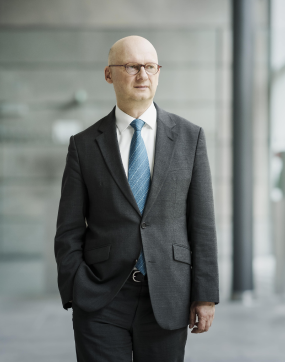
Marcus Pleyer
State Secretary, Federal Ministry of Research, Technology and Space
Marcus Pleyer studied Law in Heidelberg and Singapore as the recipient of a scholarship from the German Academic Scholarship Foundation. After graduating, he completed his practical legal training from 1995–1997 at Karlsruhe Higher Regional Court. From 1997–1998, he completed his Master of Laws (LL.M.) degree at the University of Edinburgh, UK, as the holder of a scholarship from the German Academic Exchange Service. He then moved to the Law Faculty at TU Dresden, where he worked from 1998–2004 as an academic assistant at the Chair of Public Law. Whilst here, he completed his doctoral degree (Dr. jur.) on the subject of federal equality. In 2002, he completed his Master of Business Administration (M.B.A.) at the University of Wales, in cooperation with the FernUniversität in Hagen. From 2004–2006, Dr Marcus Pleyer worked as an officer at the Federal Financial Supervisory Authority before moving to the Federal Ministry of Finance in 2006. Following this, he worked as senior adviser at the Federal Chancellery (small and medium-sized enterprises, competition policy, commercial law, stabilization of the financial market, G7, G20) until 2011. In 2011, he returned to the Federal Ministry of Finance, where he became Head of the Minister’s Office for former Federal Minister Wolfgang Schäuble until 2014. Subsequently, he headed the Division “International Financial Markets” until 2015. From 2015–2025, he was Head of Directorate VII A (combating terrorism and proliferation financing and money laundering, cybersecurity, sanctions, digital financial technologies, KfW and other promotional banks, consumer protection, supervision of the Federal Financial Supervisory Authority) at the Federal Ministry of Finance. Since 2015, Dr Pleyer has also performed a number of special roles. He was an advisor to the Ukrainian Finance Minister in Kyiv from 2015–2016 on behalf of the Federal Ministry of Finance and the Federal Foreign Office. Between 2016 and 2025, Dr Pleyer was a member of the Supervisory Board of the Landwirtschaftliche Rentenbank and, as a member of the Board of Trustees, he contributed to the setup and development of the Federal Nuclear Waste Management Fund (holding 24 billion EUR) from 2017 until 2025. From 2019–2020, he held the position of Vice President of the Financial Action Task Force – the international organisation for tackling terrorism financing and money laundering – in Paris before becoming President from 2020–2022, the first presidency under the extended two-year term of the FATF’s revised mandate. Furthermore, from 2022 until 2025, he led a project group on reforming the structures for fighting financial crime in Germany. In May 2025, Dr Marcus Pleyer became State Secretary (Deputy Minister) at the Federal Ministry of Research, Technology and Space.

Doris Klein
Deputy Director of the German Remote Sensing Data Center (DFD) of the German Aerospace Center (DLR) read Bio
Doris Klein
Deputy Director of the German Remote Sensing Data Center (DFD) of the German Aerospace Center (DLR)
Dr. Doris Klein has served as Deputy Director of the German Remote Sensing Data Center (DFD) of the German Aerospace Center (DLR) since 2023, after having been a Scientific Advisor at DFD since 2011. She earned her doctorate from the University of Bonn in 2008 and subsequently worked as a postdoc at the University of Würzburg, where she led the 'Land Surface Parameters' working group at the Chair of Remote Sensing at the Institute of Geology and Geography. From 2013 to 2020, she also coordinated the scientific use of the DLR FireBIRD mission. Doris Klein is dedicated to fostering the use of remote sensing to address societal challenges related to global and climate change. She promotes remote sensing through lectures for both students and the general public, and regularly participates in international scientific committees for Earth Observation conferences. Additionally, she serves on scientific boards of Earth Observation institutions.
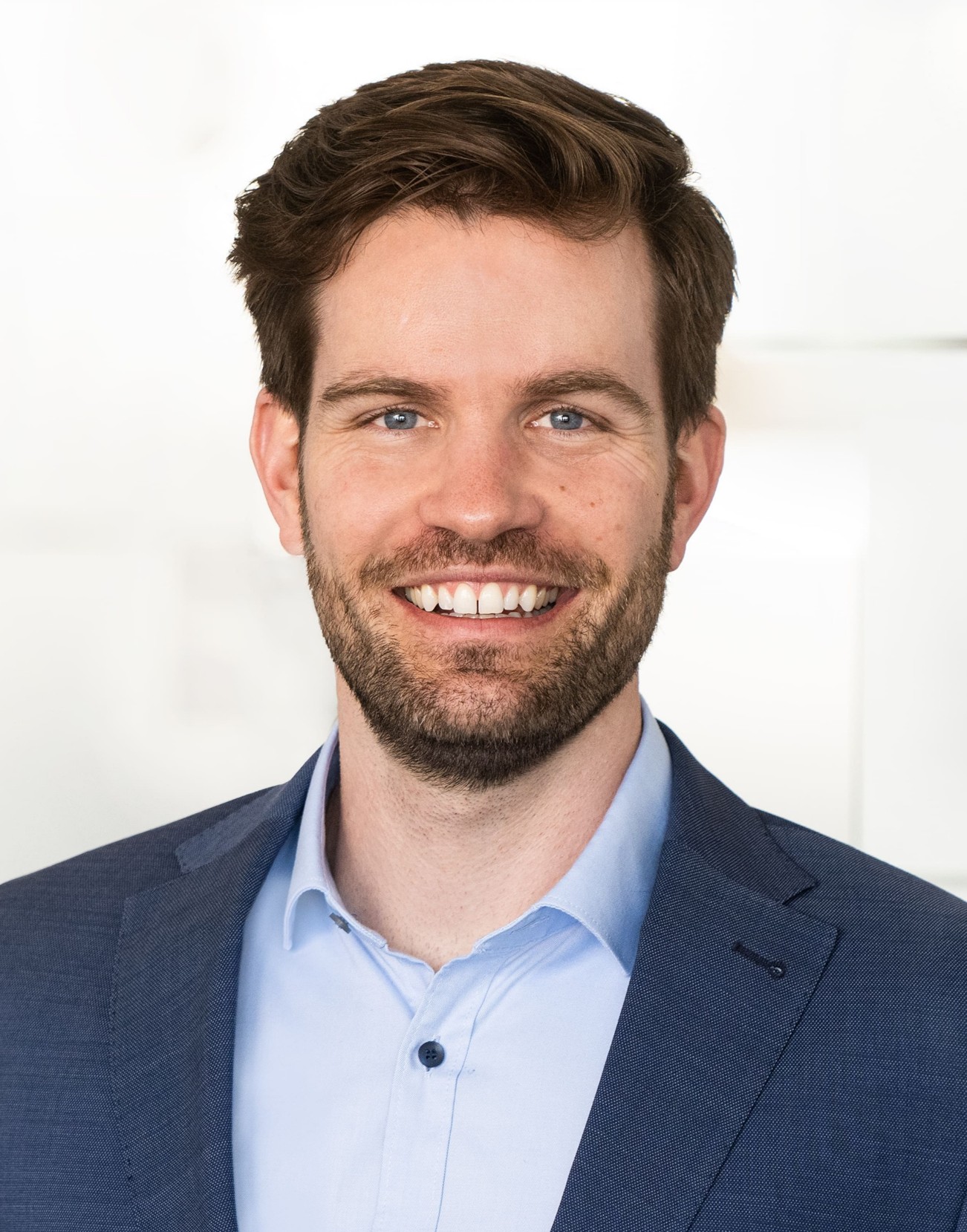
Julian Hofmann
CEO & Co-Founder, FloodWaive Predictive Intelligence GmbH
Dr.-Ing. Julian Hofmann is CEO and Co-Founder of FloodWaive, a deep-tech spin-off from RWTH Aachen University developing physics-informed AI solutions for high-resolution flood-risk intelligence and real-time early warning. He also leads the research group ``Flood Forecasting and Early Warning`` at RWTH Aachen University's Institute of Hydraulic Engineering and Water Resources Management. His work combines hydrodynamic modelling, Earth observation and environmental data, and artificial intelligence to turn complex flood dynamics into actionable information for municipalities, utilities and critical infrastructure.

Lucas Noldus
Founder and chief scientist of Noldus Information Technology
Lucas Noldus is founder and chief scientist of Noldus Information Technology, a developer of software tools and integrated measurement systems for the study of human behavior and human-system interaction, headquartered in The Netherlands, with branches across Europe, North America and China. Noldus’ systems have found their way into thousands of academic and industrial research labs around the world. Lucas Noldus obtained his MSc degree in biology from Leiden University (1983) and his PhD degree in behavioral ecology from Wageningen University (1989). In 2019, Lucas Noldus was appointed as professor in Behavior, Information Technology and Innovation at the Donders Institute for Brain, Cognition and Behavior at Radboud University, Nijmegen, The Netherlands. In 2025, he was appointed as adjunct professor at the College of Architecture and Urban Planning, Tongji University, Shanghai, China. He has (co)authored more than 140 papers and conference presentations about methods and techniques in behavioral research. In 2023, Lucas Noldus was elected as Fellow of the Netherlands Academy of Engineering. Besides his corporate and academic work, Lucas serves on a range of boards and committees related to science, innovation and sustainability.
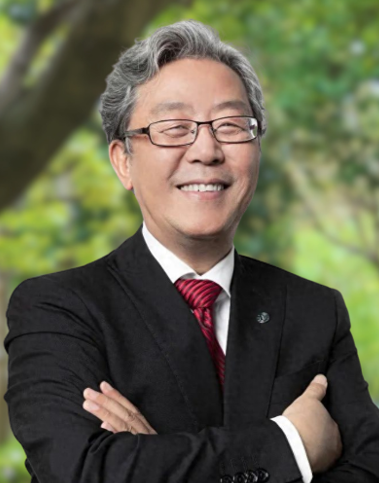
Siegfried Zhiqiang WU
Deputy Chair, CAETS Communications Commitee
WU Siegfried Zhiqiang is a Fellow of the German National Academy of Science and Engineering (acatech), Academician of the Chinese Academy of Engineering (CAE), Fellow of the Royal Swedish Academy of Engineering Sciences (IVA), and Honorary Fellow of the American Institute of Architects (Hon. FAIA). Professor of Tongji University, Councilor of the Shanghai Municipal Government, Standing Vice Chair of the Shanghai Overseas Returned Scholars Association, Member of the Shanghai Artificial Intelligence Development Experts’ Committee. Prof. WU was Chief Planner of the Shanghai World Expo 2010, Chief Planner of the Qingdao World Horticultural Exposition 2014, and Chief Planner of the Comprehensive Urban Design Plan for the Beijing Municipal Administrative Center, and has led more than 150 major urban and regional planning projects. From 2011 to 2021, he served as Vice President of Tongji University. He has also served as Director of the Sino-German College, Dean of the Sino-German Institute, and Dean of the Sino-German College of Engineering at Tongji University. He is widely recognized as a pioneering figure in urban planning theory and methodology, with profound influence on the development of urban planning practice and education in China and internationally.
Session 2: Bridging Perspectives – Earth Observation for Security, Defense, and Resilience
Claudia Eckert
acatech President
Prof. Dr. Claudia Eckert is President of acatech – National Academy of Science and Engineering and executive director of the Fraunhofer Institute for Applied and Integrated Security AISEC in Garching and professor at the Technical University of Munich, where she holds the Chair for IT Security at the Department of Computer Engineering (CE) of the School of Computation, Information and Technology (CIT). Her research interests include the development of technologies to enhance the system and application security, the security of embedded systems, and the investigation of new techniques to increase the resilience and robustness of systems against attacks. Since July 1st, 2025, Claudia Eckert has been appointed as Scientific President of acatech. In this role, together with Co-President Thomas Weber, she heads the academy, which advises policymakers and society on issues relating to technology-driven innovation. She has been a member of acatech since 2010 and a member of the Executive Board since 2014. She is also a member of the Bavarian Academy of Sciences and Humanities (BAdW). She plays an active role on numerous scientific boards of trustees and advisory boards, including the Volkswagen Foundation's Board of Trustees, the Bavarian AI Council, and the National Cybersecurity Council's scientific working group. In 2021, Claudia Eckert was honoured with the Bavarian Order of Merit in recognition of her outstanding achievements in cybersecurity, and in 2022 she was inducted into the German Research Hall of Fame. In 2023, the Technical University of Munich honoured her with the Heinz Maier-Leibnitz Medal in recognition of her exceptional contributions to IT security. In 2014, the Federal Ministry of Education and Research and the German Informatics Society honoured her with Germany's Digital Minds award for her commitment to advancing digital development in Germany through ideas and projects. As a member of various national and international industrial advisory boards and scientific committees, she advises companies, trade associations and the public sector on all issues relating to IT security. In expert committees, she is involved in shaping the technical and scientific framework conditions in Germany and in the design of scientific funding programs at the EU level.
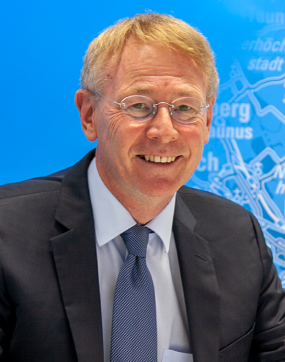
Paul Becker
Former President Federal Agency for Cartography and Geodesy
Paul Becker is the retired President and Professor of the Federal Agency for Cartography and Geodesy. He studied meteorology at the University of Hamburg, obtained his diploma in 1984 and his doctorate in 1987. He worked as a research assistant at the University of Hamburg and at the Max Planck Institute for Meteorology. In 1989 Paul Becker moved to the German Weather Service. Initially, he devoted himself to operational forecasting service. In 2008, Paul Becker joined the executive board of the German Weather Service and took over the management of the business area Climate and Environment. Since 2010 he was also Vice President of the German Weather Service. In 2017, he accepted a teaching assignment at the Goethe University Frankfurt am Main, which appointed him honorary professor one year later. In 2019, Paul Becker moved to the Federal Agency of Cartography and Geodesy as President. He retired in February 2026. Paul Becker is a colonel in the reserve of the German Bundeswehr.

Patrik Fältström
Senior Security Consultant at Netnod
Patrik Fältström is Senior Security Consultant at Netnod and one of Sweden’s leading Internet pioneers. He has worked with UNIX since the 1980s, DNS since 1987, and has contributed to Internet standardization since 1989. He has held senior roles within the Internet Engineering Task Force (IETF), including Area Director, and has served on the Internet Architecture Board (IAB) and been on the board of the Internet Society (ISOC). He is widely recognized for his work on Internationalized Domain Names (IDNs) and ENUM, including being inducted in Internet Hall of Fame. Fältström has also played key roles in global Internet governance through ICANN, where he chaired the Security and Stability Advisory Committee (SSAC), and has contributed to the UN Internet Governance Forum (IGF). He is a member of the Royal Swedish Academy of Engineering Sciences (IVA), advisor to the Swedish government on Internet issues, and active in cybersecurity exercises such as Locked Shields. He holds an MSc in Mathematics from Stockholm University and is a Knight of the Order of the Cross of Terra Mariana.

Lieutenant General Michael Vetter
Director-General for Innovation and Cyber and Chief Information Officer at the Federal Ministry of Defence (BMVg) read Bio
Lieutenant General Michael Vetter
Director-General for Innovation and Cyber and Chief Information Officer at the Federal Ministry of Defence (BMVg)
Lieutenant General Michael Vetter, born in 1962, has served as the Director-General for Innovation and Cyber and Chief Information Officer at the Federal Ministry of Defence (BMVg) in Berlin since October 2025. After joining the Bundeswehr in 1982 and completing his officer training, he studied Economics and Organizational Sciences. Following several troop and staff assignments, he commanded the Air Force Maintenance Regiment 2 in Diepholz from 2005 to 2007 and the Bundeswehr Logistics Center in Wilhelmshaven from 2012 to 2017. In the latter position, he was responsible for the global logistical support of the German Armed Forces. During this period, in 2013, he also held the Position as ISAF Deputy Chief of Staff for Logistics at Regional Command North in Mazar-e-Sharif, Afghanistan. In 2017, he became the first Chief of Staff of the newly established Cyber and Information Domain Service Command. From 2017 to 2018, he additionally performed the duties of Deputy Chief of the Cyber and Information Domain Service. From April 2019 to September 2025, he served as Director-General for Cyber/Information Technology and Chief Information Officer at the Federal Ministry of Defence in Berlin.

Sylvia Schwaag Serger
President of the Royal Swedish Academy of Engineering Sciences (IVA)
Professor Sylvia Schwaag Serger has spent 20 years designing, implementing and studying science and technology policy in Europe and China. She has been commissioned as expert by the OECD, was chair of the board of the Swedish Foundation for Internationalization of Higher Education and Research (STINT), member of the Swedish Prime Minister’s Innovation Council and one of the lead authors of the Heitor Report. She chairs the Scientific Council of the Swedish Research Council for Sustainable Development (Formas) and is deputy chair of the Austrian Council for Science, Technology and Innovation. Sylvia has an MA from Johns Hopkins SAIS and a PhD from the LSE. From 2018-2020 she was Deputy President of Lund University. Since 2024, she is President of the Royal Swedish Academy of Engineering Sciences (IVA).

Anna Rathsman
Chair of the Board of EISCAT / Former Director General Swedish National Space Agency
Anna Rathsman has unique in-depth knowledge and experience from space technology, business and space science within different leading positions in the space business domain for more than 30 years. She has, among other things, been appointed as the Director General for the Swedish National Space Agency, including three years as the Chair of ESA Council. At the moment, she is the Chair of the Board of EISCAT (European Incoherent Scatter Scientific Association). A governmental owned radar infrastructure equally owned by Sweden, Norway and Finland. She is also member of the board at Stockholm University.
Gala Dinner
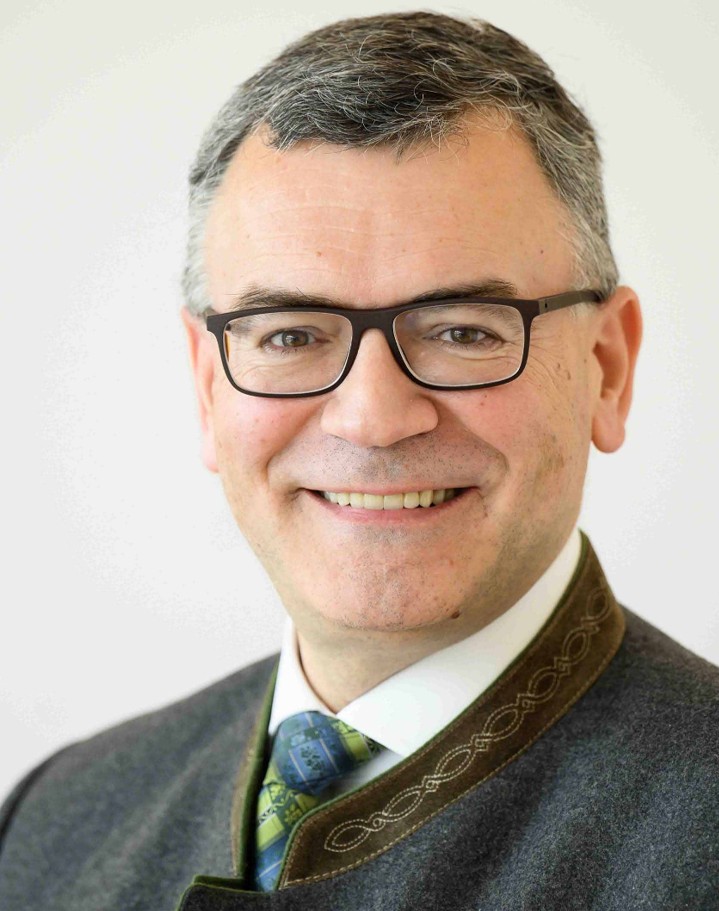
Florian Herrmann
Head of the Bavarian State Chancellery, State Minister for Federal Affairs and Media
Minister of State Dr. Florian Herrmann has been a member of the Bavarian State Government since March 21, 2018. He was first appointed Head of the Bavarian State Chancellery and State Minister for Federal Affairs, and was reappointed on November 12, 2018, and again on November 8, 2023, to the cabinet of Minister-President Dr. Markus Söder. In his current role, he serves as Head of the Bavarian State Chancellery and State Minister for Federal Affairs and Media, with additional responsibility for film and film funding. During the Covid pandemic, he also served as Covid Coordinator of the Bavarian State Government. After graduating from Dom-Gymnasium in Freising, he studied law in Munich and completed his studies with honors. He then earned an LL.M. from the University of Pennsylvania in Philadelphia (USA) and submitted his doctoral dissertation in Frankfurt am Main on a topic relating to the history of international law. He later worked as a lawyer in his own law firm, specializing in commercial law. Since 2008, Dr. Florian Herrmann has been a member of the Bavarian Landtag for the electoral district of Freising. Before joining the cabinet, he was chairman of the Committee for Municipal Affairs, Domestic Security and Sports, spokesperson for domestic affairs of the CSU parliamentary group, and chaired several Committees of Inquiry. He has been a member of the CSU District Executive for Upper Bavaria since 2009 and of the CSU Party Executive since 2013. In Freising, he has served as elected county councilor since 2002 and as county chairman of the CSU since 2007. From 2019 to 2023, he chaired the CSU Media Commission; since 2024, he has chaired the CSU Film Commission. Dr. Florian Herrmann is also active in a number of honorary functions, including the Bavarian Road Safety Organization, the Bavarian Firefighting Association, and the Catholic Men Association of Tuntenhausen. He is the holder of the Bavarian Order of Merit.

Ortwin Renn
Former Scientific Director at the Research Institute for Sustainability (RIFS/IASS), acatech Fellow read Bio
Ortwin Renn
Former Scientific Director at the Research Institute for Sustainability (RIFS/IASS), acatech Fellow
Prof. Ortwin Renn is a social scientist focusing on risk governance. He retired as scientific director at the International Institute for Advanced Sustainability Studies (IASS) in Potsdam (Germany) in 2023 and serves as a professor emeritus for environmental sociology and technology assessment at the University of Stuttgart. He directs the non-profit company DIALOGIK, a research institute for the investigation of communication and participation processes. Ortwin Renn has a doctoral degree in social psychology from the University of Cologne. His career includes teaching and research positions at Clark University (Worcester, USA), the Swiss Institute of Technology (Zuerich) and the Center of Technology Assessment (Stuttgart). His honours include the National Cross of Merit Order, honorary doctorates from the Swiss Institute of Technology and the Midsweden University, the “Outstanding Research Award” of the Society for Integrated Disaster and Risk Management (IDRiM) and the “Distinguished Achievement Award” of the Society for Risk Analysis (SRA). Renn is a member of the German National Academy of Sciences “Leopoldina”, the Berlin-Brandenburg Academy of Sciences (Berlin), and of the German National Academy of Technology and Engineering (Acatech). He has published more than 250 peer reviewed articles. His most prominent English publication is the book “Risk Governance. Coping with Uncertainty in a Complex World (London: Earthscan 2008).
Session 3: Soil – Perspectives through Remote Sensing and Global Insights
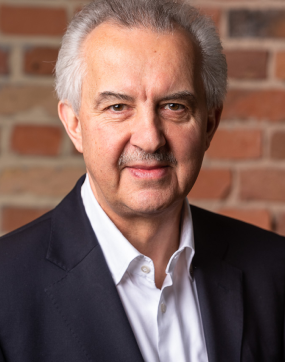
Reinhard F. Hüttl
Scientific Director and Managing Partner of EEI Eco-Environment Innovation GmbH / acatech Fellow
Prof. Dr. Dr. h.c. Reinhard F. Hüttl After studying in Germany and the USA and earning his doctorate, Reinhard Hüttl, a forestry and soil scientist, was head of the international research department of Kali und Salz (BASF-Group) Kassel, Germany from 1986 to 1992. After a professorship in Hawaii (1990/91) he held the Chair of Soil Protection and Recultivation at the Brandenburg University of Technology in Cottbus, Germany from 1993 to 2021. From 2007 to 2021 he was also Scientific Director and Chairman of the Board of the German Research Center for Geosciences (GFZ) in Potsdam. Since 2021, he is Scientific Director and Managing Associate of the Eco-Environment Innovation eGbR in Berlin. From 1996 to 2000 he was member of the German Government's Expert Council on the Environment, from 2000 to 2006 member of the National Science Council. He was president and member of the German Bioeconomy Council from 2009 to 2019. From 2012 to 2021 he served on the jury of the Queen Elizabeth Prize for Engineering, London, UK. From 2008 to 2017, he was president of the German National Academy of Science and Engineering (acatech). Reinhard Hüttl is also member of further science academies (e.g. Swedish Royal Academy of Agriculture and Forestry). From 2013 to 2019, he was president of Euro-CASE, Paris, France. Since 2025 he is the representative of acatech in Euro-CASE where he leads a working group on soils. 2022 he initiated an interdisciplinary soil group for the Nantesbuch Foundation for Art and Nature (SKN).
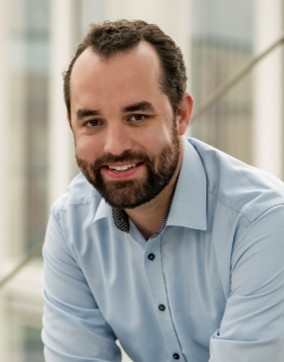
Roman Werner
Managing Director, TUM Venture Labs
Roman Werner is a future shaper at the intersection of agriculture, beverages, food, and biotechnology. As Managing Director of the TUM Venture Lab Food/Agro/Biotech (FAB) at the Technical University of Munich (TUM), he supports visionary innovation and entrepreneurial initiatives - helping founders translate scientific excellence into scalable ventures. Based at the TUM School of Life Sciences in Weihenstephan, the FAB serves as a university startup hub, providing access to essential infrastructure and deep technical expertise. His academic path is closely linked to TUM: after studying Brewing and Beverage Technology, he completed a PhD in process engineering. He has led and contributed to multiple research projects in beverage and food technology and has authored several scientific articles and book chapters. Bosl Werner’s research focuses on process engineering in the AgriFood sector. He is also deeply engaged in emerging sensor technologies, as well as AI and digitalization concepts that enable a smarter, more resilient food system. With a strong combination of scientific depth and entrepreneurial focus, Dr. Werner helps drive the transformation of the food and beverage industry into the digital age - safely, sustainably, and with lasting impact.
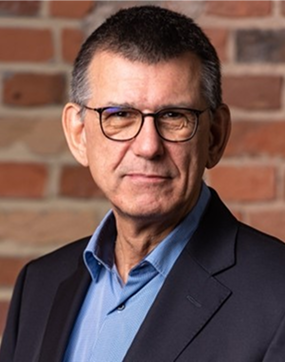
Uwe Schneider
Managing Director, Eco-Environment Innovation eGbR
Dr. Uwe Schneider has been managing director of the Eco-Environment Innovation eGbR (EEI) since the beginning of 2021. He is a proven expert in the field of soil and land use ecology in the frame of climate protection and adaptation and is concerned with development of related inter- and transdisciplinary networks at the interface between research and application. He is closely engaged in the actual Euro-CASE inititiave on soils focusing on practice oriented options for the restoration of fundamental soil functions, and, in more particular, on those for stabilizing and enhancing soil carbon storage. After having studied forest sciences he received a doctorate at the University of Bayreuth in natural sciences in 1984. He then worked for 5 years as a forest advisor for the German Technical Mission in Guatemela and Honduras. He continued his research activities at the Brandenburg University of Technology in Cottbus, Germany. In 2007 he became head of staff of the scientific executive board of the German Research Center for Geosciences, Potsdam, being in charge of EU affairs and technology transfer, among other things, in the areas of remote sensing and geoenergy. He is experienced in the management of transdisciplinary joint projects both at the national, European and international level.

Minggang XU
Shanxi Agricultural University, CAE
Dr. Minggang Xu is an academician of the International Eurasian Academy of Sciences, an academician of the Chinese Academy of Engineering, and an expert in soil improvement and fertilization. He graduated from Northwest Agricultural University in 1994 with a doctorate degree in soil science. He is the chair of the Academic Committee of Shanxi Agricultural University, the chief expert of the leading innovation team in Shanxi Province, and the leader of the expert group of cultivated land quality of the Ministry of Agriculture and Rural Affairs. Dr. Xu has been engaged in scientific research on cultivated land quality improvement for a long time and has led the long-term experimental network of cultivated land quality in China. Focusing on the major scientific and technological problems of soil degradation in China, such as low soil organic matter and aggravation of acidification, he has developed and proposed theory and key technologies of quantitative improvement of soil organic matter and classified prevention and control of red soil acidification. Dr. Xu has published nearly 400 papers as the first or corresponding author, including more than 100 SCI papers and 8 monographs. He has won the Food and Agriculture Organization (FAO) of the United Nations, Glinka World Soil Award, 4 second National Science and Technology Progress Award prizes, the first ``Agricultural Science Award`` of the Zhou Guangzhao Foundation, the National Innovation Award, and many other awards.

Niklas Wallsargård
CEO & Co-founder of Improvin'
Niklas has an academic background in applied physics and control theory, with experience from CERN and the business side of Microsoft. He is a second-time founder; his first company, Skira, became the largest grain trading platform in the Nordics. He co-founded Improvin' in 2022 and leads the company's commercial and strategic direction across its core markets in Europe & US.
Anna Rathsman
Chair of the Board of EISCAT / Former Director General Swedish National Space Agency
Anna Rathsman has unique in-depth knowledge and experience from space technology, business and space science within different leading positions in the space business domain for more than 30 years. She has, among other things, been appointed as the Director General for the Swedish National Space Agency, including three years as the Chair of ESA Council. At the moment, she is the Chair of the Board of EISCAT (European Incoherent Scatter Scientific Association). A governmental owned radar infrastructure equally owned by Sweden, Norway and Finland. She is also member of the board at Stockholm University.

Prakash Chauhan
Director of National Remote Sensing Centre (NRSC) India
Dr. Prakash Chauhan obtained his Post Graduate Degree in Applied Geophysics from University of Roorkee (now Indian Institute of Technology (IIT), Roorkee) and Ph. D. in Physics from Gujarat University, Ahmedabad. Prior to joining National Remote Sensing Centre (NRSC), Hyderabad, he was the Director at the Indian Institute of Remote Sensing (IIRS), Dehradun since April 2018. He joined Indian Space Research Organisation (ISRO) in 1991 at Space Applications Centre, Ahmedabad as scientist and since then working for the applications of Space Technology including Remote Sensing technology for Geosciences, Atmospheric and Oceanic process studies, Natural resources management for ocean and land resources. He initiated research activities for planetary remote sensing to study solar system objects mainly Earth’s Moon and Mars, through Indian planetary missions. His major achievements are in the area of Earth Observation Applications including development of algorithms for ocean colour parameter retrieval, aerosol remote sensing for space-based air quality monitoring, climate response to various ecosystems and disaster risk reduction. He has done lead work in using the hyperspectral satellite data for Indian Planetary Missions such as Chandrayaan-2 and Chandrayaan-1 for lunar surface composition mapping. He had been the Principal Investigator for Infrared Imaging spectrometer (IIRS) instrument on-board Chandrayaan-2 mission. His work on Chandryaan-2 IIRS spectrometer data has resulted in unambiguous detection of H2O and OH on the surface of the Moon. His findings have conclusively established presence of water molecules at different location on the Moon. He is currently serving as Chair of the Working Group of Whole at STSC of UN- Committee on Peaceful Uses of Space. He has also served as Chair for CEOS Working Group on Capacity Building and Data Democracy (WGCapD) for the year 2018-19. He had also been member of prestigious NASA-ISRO Planetary Science working group. He has been awarded with Asia Pacific Region Excellence in Space Award 2023 by Asia Pacific regional Space Agencies Forum, Prof. P.R. Pisharoty memorial award for the year 2004 by Indian Society of Remote Sensing, Hari Om Ashram Prerit Dr. Vikarm Sarabhai Research Award by Physical Research Laboratory (PRL), Ahmedabad for 2009, ISRO merit award by Indian Space Research Organization in 2010 and Satish Dhawan Award by ISRS, Dehradun for 2016. He has published more than 150 peer review papers in national and international journals. He is elected as Corresponding Member of International Academy of Astronautics (IAA) 2024 and is currently fellow of the National Academy of Science (NASI), Allahabad, Indian Society of Remote Sensing and Indian Social Science Academy.
Session 4: Natural Hazards – From Early Warning to Recovery
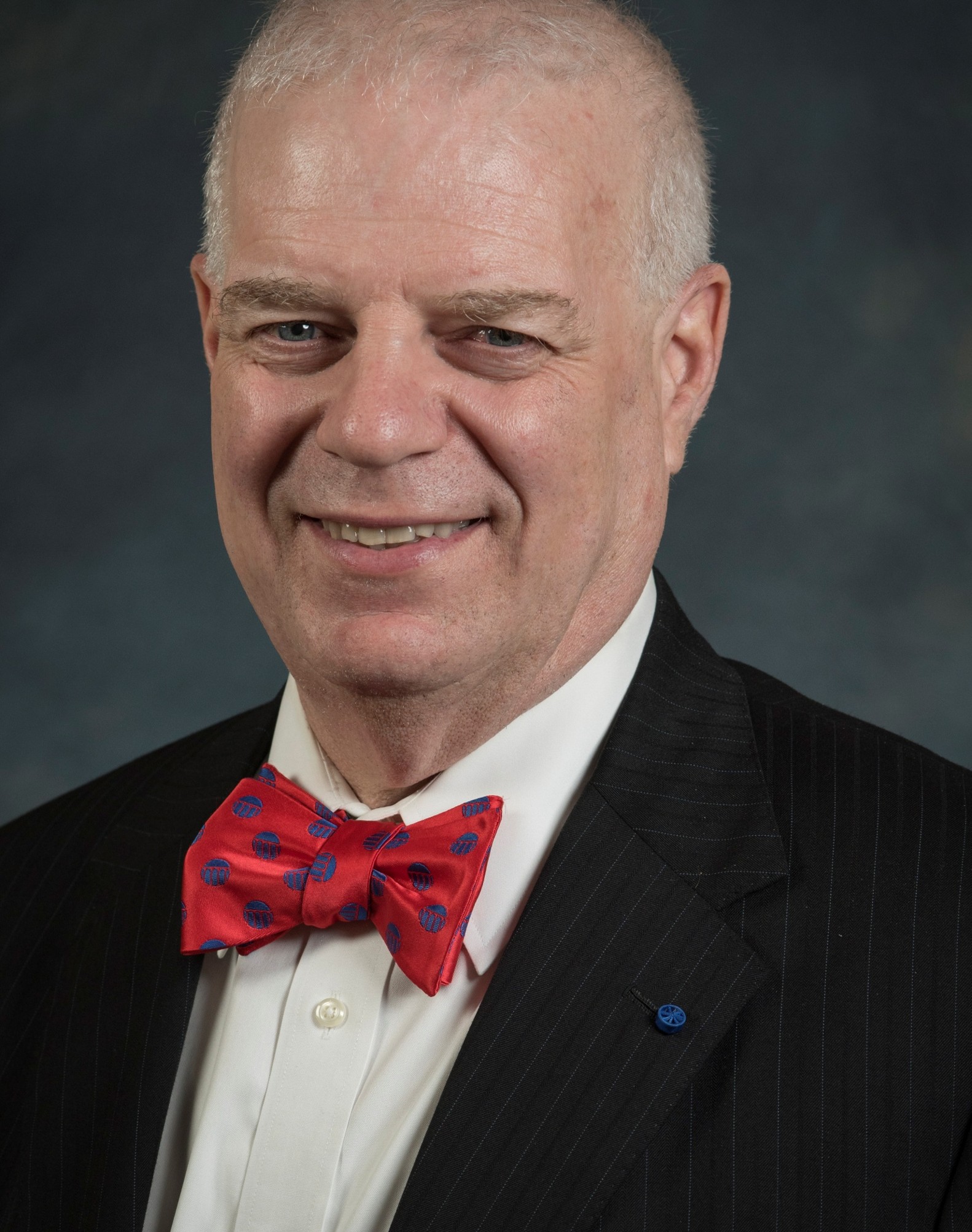
Alton (Al) D. Romig, Jr.
Executive Officer, National Academy of Engineering
Alton (Al) D Romig, Jr. is Senior Advisor to the National Academy of Engineering (NAE), having served as its Executive Officer from 2015 to 2026 with responsibility for the Academy’s program, financial, and membership operations. Previously, he was vice president and general manager of Lockheed Martin Aeronautics Company’s Advanced Development Programs, better known as the Skunk Works®. He joined Sandia National Laboratories in 1979 as a member of the technical staff and progressed through research and development management positions, becoming Vice President for Research and Development and Chief Technology Officer in 1999 and Executive Vice President in 2005. He subsequently served as deputy laboratories director and chief operating officer until 2010, when he transferred to the Skunk Works. Throughout his career, Romig has led complex national security, homeland security, Earth observation, and emergency response programs. At Sandia, he was responsible for Department of Homeland Security activities and led defense-related Earth monitoring satellite programs supporting national security missions. He also directed national emergency response activities, serving as the senior executive in charge of Sandia’s technical support following Hurricane Katrina and the devastation in New Orleans. Later, at the Skunk Works, he oversaw the rapid deployment of unmanned aerial systems equipped with thermal imaging following severe tornadoes in Oklahoma, helping first responders locate survivors trapped beneath rubble. These experiences have given him a firsthand appreciation of the role advanced engineering, Earth observation, and timely technical information can play across the natural-hazard cycle, from preparedness and situational awareness through response and recovery. Romig has served on numerous corporate, nonprofit, and advisory boards. He was a member of the board of directors of Football Research Inc., a nonprofit established by the National Football League to advance engineering solutions to improve player safety. He has served on advisory committees for major universities and Department of Energy laboratories and was a member of the board of the UK Atomic Weapons Establishment (2003–2008), where he chaired the program committee. He also held a Visiting Associate appointment at the California Institute of Technology (2019–2024). Romig is an Honorary Member of ASM International and a fellow of The Minerals, Metals & Materials Society, IEEE, the American Institute of Aeronautics and Astronautics, and the American Association for the Advancement of Science. He was elected to the NAE in 2003 for outstanding contributions to the science and technology of materials and for innovative research and development on defense systems, and to the Council on Foreign Relations in 2008. He has approximately 40 years of volunteer service to the National Academies and its National Research Council. Romig received the ASM Silver Medal for Materials Research in 1988 and the IEEE-USA George F. McClure Citation of Honor in 2023 for significant contributions to the aerospace industry, national security, and engineering policy. He received his BS (1975), MS (1977), and PhD (1979) in materials science and engineering from Lehigh University.

Florence Rabier
Non-Executive Director Met Office UK
Dr Florence Rabier is a strategic leader in weather and climate science, with over 35 years’ experience driving innovation, operations, and governance in meteorology. Dr Rabier is currently Non-Executive Director at the Met Office in the UK and has been Director General of the European Centre for Medium-Range Weather Forecasts (ECMWF) from 2016 to 2026. As Director-General of ECMWF, she steered major expansion and transformations, including a radical development and implementation of AI weather prediction models, formed global partnerships, and delivered high-quality services to 35 member and cooperating states. She is recognised globally for pioneering contributions to Earth System Numerical Weather Prediction and the use of satellite data, with a strong record of board service, programme leadership, and engagement with meteorological services, UN, space agencies and scientific bodies. She is the recipient of the European Meteorological Society Silver medal, an honorary member of the American Meteorological Society, Chevalier de la Légion d’Honneur, recipient of Great prize of the Air and Space Academy for the IASI (Infrared Atmospheric Sounding Interferometer) project and a member of the National Academy of Technologies of France.

Sreedhara Panicker Somanath
Former Chairman of ISRO and Secretary to the Government of India, Department of Space read Bio
Sreedhara Panicker Somanath
Former Chairman of ISRO and Secretary to the Government of India, Department of Space
Dr. Sreedhara Panicker SOMANATH Dr. Sreedhara Panicker Somanath served as a Distinguished Scientist (Apex) and Secretary, Department of Space and Chairman, ISRO till January 2025. Dr. S. Somanath, having a career spanning nearly 40 years, is an expert in the field of space technology and systems engineering of launch vehicles, and has made significant contributions. Presently he serves as the Prof. Vikram Sarabhai Professor at ISRO, Distinguished visiting professor at IISc, Bengaluru, Chancellor of Chanakya University, Bengaluru and an Advisor to State Government of Andhara Pradesh. As Secretary of DoS, he had piloted the National Space Policy, engagement of ISRO with private space initiatives and start-ups in space sector. Under his leadership mission Chandrayaan-3 landing near the south pole of the Moon was accomplished. Notable missions during his tenure include Aditya-L1, XpoSat, INSAT-3DS, NVS-01, Oceansat, GSAT-24, SpaDeX & LVM3-OneWeb missions. Under his leadership Small Satellite Launch Vehicle and Test Vehicle were developed and landing experiments of the Re-usable Launch Vehicle (RLV-LEX) were conducted. He played a key role in the architecture of Gaganyaan and accomplished the first mission abort demonstration. He was instrumental in developing the ‘Space Vision-2047’, where Gaganyaan expansion program, Chandrayaan series and other exploration missions, Bharatiya Antariksha Station development and human mission to Moon, new launch pads were approved by government. He was the Director of Vikram Sarabhai Space Centre (VSSC) during 2018-21 and the Director of Liquid Propulsion Systems Centre (LPSC) during 2015-18. He was System Engineer and the Project Director of LVM3-X/CARE mission which was successfully accomplished in December, 2014. Dr. S. Somanath took his B. Tech in Mechanical Engineering from TKM College of Engineering, Kollam, Masters in Aerospace Engineering from IISc, Bengaluru and PhD from IIT Madras. He has been bestowed with Honorary Doctorates from many universities. He is a Fellow of Indian National Academy of Engineering (INAE), currently vice president responsible for Academic, Professional and International affairs, Fellow of Indian National Academy of Science (INSA), Aeronautical Society of India (AeSI), Astronautical Society of India (ASI), US National Academy of Engineers (US-NAE) and a member of International Academy of Astronautics (IAA). He is the President (Elect) of Aeronautical Society of India (AeSI) and President of Society of Aerospace Quality and Reliability (SAQR). He received ‘Hall of Fame’ award from International Astronautics Federation (IAF), Von-Karman award from International Academy of Astronautics (IAA), National Aeronautics Prize from AeSI, Space gold medal from ASI, Distinguished alumni award of IISc, Bengaluru and IIT Madras, and distinguished fellow award from IIT Kanpur. He has published papers in the areas of structural dynamics and control, materials modelling, dynamic analysis of separation mechanisms, vibration and acoustic testing, launch vehicle design and launch services management. Dr. S. Somanath has widely travelled, visited global space agencies and facilities, has been a delegate to UN-COPUOS, and was the vice President of International Astronautical Federation (IAF).

Weiping Jiang
Dean of the Scientific Research and Development Office, Wuhan University
Prof. Weiping Jiang, born in June 1972, received his Ph.D. in Geodesy and Surveying Engineering from Wuhan University in 2001. From August 2003 to August 2004, he conducted postdoctoral research on crustal movement at the Nordic Volcanological Center in Iceland. He served as a visiting professor in Geodesy at the University of Stuttgart from February to December 2007. He has been a professor at Wuhan University since 2005 and served as Director of the GNSS Research Center from 2016 to 2024. In 2023, he was appointed Dean of the Scientific Research and Development office at Wuhan University. Since November 2025, he has been Academician of Chinese Academy of Engineering. His scientific work focuses on satellite geodesy and its applications, including establishment and maintenance of terrestrial reference frames. He has also established high precision global mean sea surface model and conducted inland water monitoring, crustal deformation monitoring, extreme weather and climate change using Earth Observation data. He has published more than 300 peer-reviewed academic papers and 3 books involving these related fields. He serves as a member of the China National Committee for International Union of Geodesy and Geophysics, Vice Chairman of Urban Safety Monitoring and Early Warning Branch of China Association for Disaster Prevention, as well as the Chief scientist of Hubei Luojia Laboratory.